The young company Zympler is a founding partner in the GENIUS-project, which is tackling net congestion on the TU/e campus. The company develops an intelligent energy management system that balances peak loads on the campus grid.
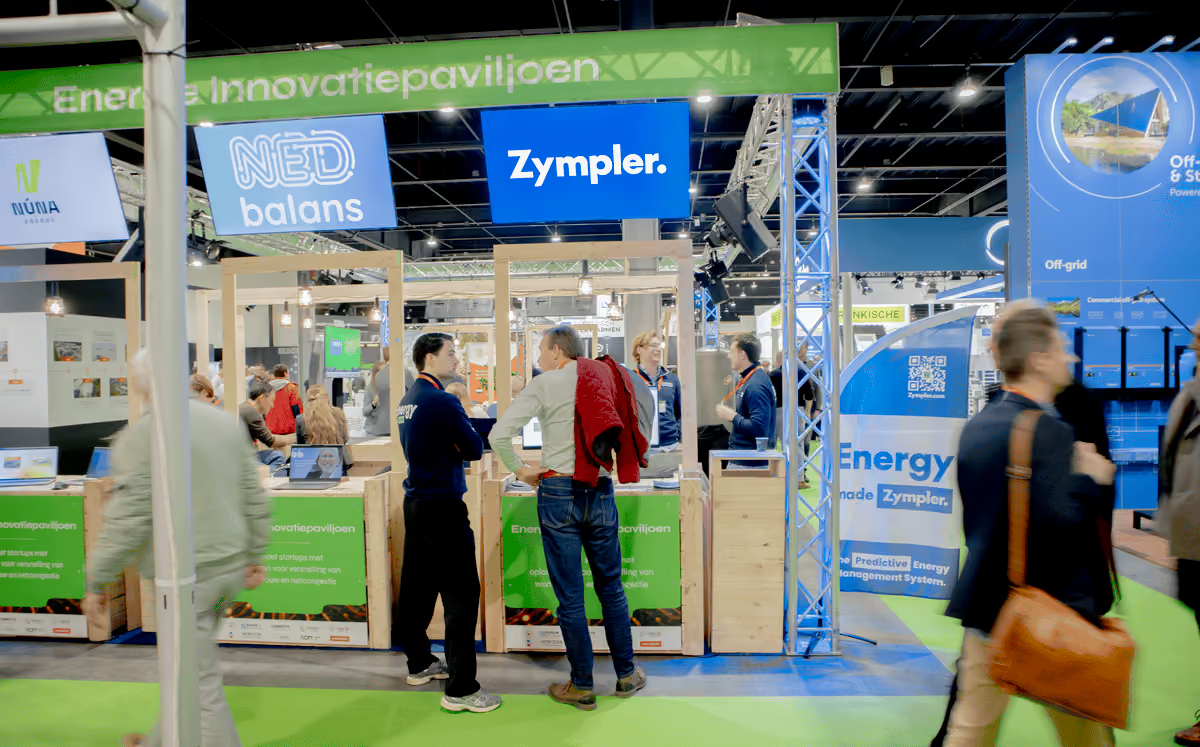
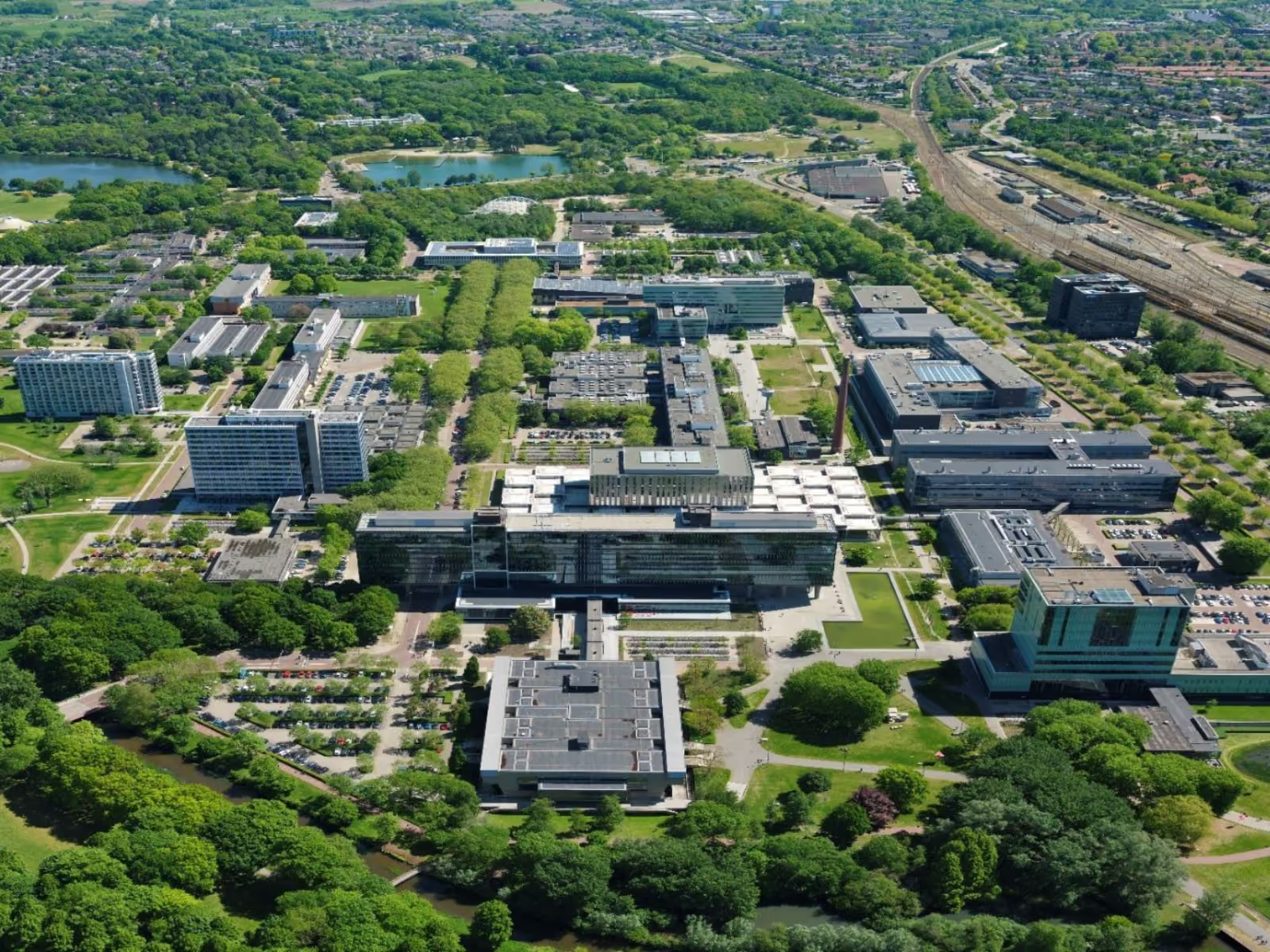
Like many other organizations, TU/e is reaching the limits of its grid connection. On certain moments, that is. The trick is to make optimal use of the residual capacity of the grid, since most of the time, many grid connections do not come close to using their full capacity.
‘We want to become a regional example of how to manage, or rather, prevent grid congestion.’ Tom Selten
The GENIUS-project, funded by a strategic European OPZuid grant, aims to solve the problem of net congestion on campus and to serve as a testing ground for innovations. Tom Selten, CEO of Zympler, co-initiated the project together with EIRES and TU/e Campus & Facilities. One of the things Zympler can do with its smart control platform (‘think of it as a digital Chief Energy Officer’) is to provide insights into when and where TU/e is using how much energy. Selten: ‘We can monitor the campus grid activity in real-time, having brought together all of the campus’ assets in a single platform.’ Zympler for example established that TU/e’s base load alone is about half of the contracted maximum by looking at the energy consumption on campus during Christmas Day, when no one is around.
Battery for balance
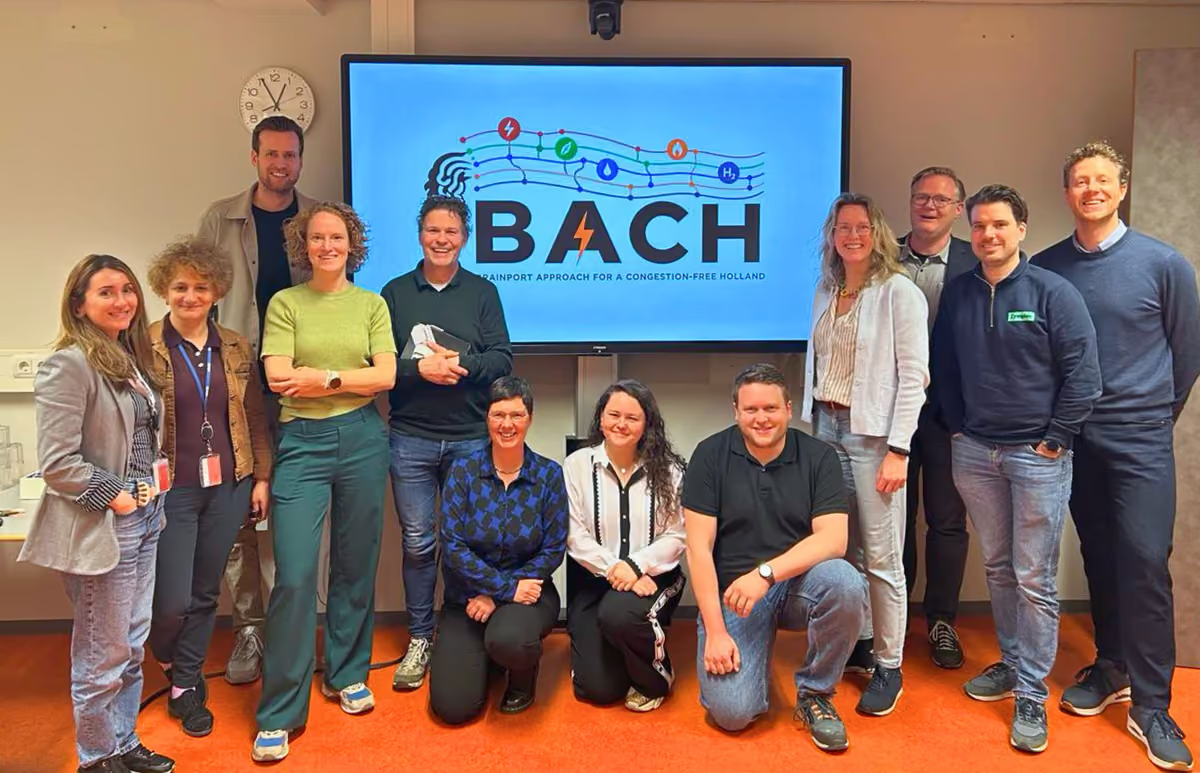
In addition to monitoring, Zympler’s platform can also steer the energy usage: ‘For example, over the past months, we have been charging and discharging the campus’ battery to shave off the peak loads on the campus grid,’ Selten says. The system works 24/7, gathering data about both the generation of electricity, for example via TU/e’s own solar panels, and the real-time usage. In addition to this, the system predicts the expected demand based on historic data combined with, for example, weather predictions. ‘For us, TU/e has acted as one of our launching customers, providing us with the opportunity to show what we are capable of,’ Selten states. ‘Within GENIUS and its successor BACH, we can test our systems, further develop them, and experiment with new technologies like heat pumps, electrolyzers or RIFT’s iron power installations. All in all, we want to become a regional example of how to manage, or rather, prevent, grid congestion.’
Read the full article of EIRES magazine here.

The grid doesn't wait.
Every month without proper management means lost margin.
Zympler can be directly deployed on existing infrastructure.